Tag Archive for 'music business'

How To Get Your Music On Music Blogs

This is the first post in a series of guest posts by MusicNomad, a musicians advocate organization that researches, reviews and ranks thousands of companies in the music industry to filter out the ones that help musicians the most.
Music blogs are the new A&R scouts for the music industry. Music fans and record labels use influential music blogs to filter out and find new music, and as a result, all developing artists must now leverage the music blog scene to succeed. Some music blogs write about popular music and give reviews, gossip and MP3’s, but the most influential ones are usually written by one blogger who writes about music he loves and does not follow the mainstream music scene. Music fans on these sites go there because they have the same musical tastes of those bloggers and want to discover cool new music. As a result, if your band is lucky enough to be positively reviewed on a music blog, it can bring new fans to your shows and websites. This should sound familiar to Evolving Music readers, as it shares the same underlying principal as the Niche Music System.
Well how do these bloggers find new music to write about? They go to record stores (yes there are still a few around) and ask the clerks what is new and cool. They ask friends and check out lots of live shows. And, they take music submissions through their sites. The challenge is that most bloggers have no time to listen to everything submitted, so the chances of them listening to your music and getting put on their blog are slim.
However, MusicNomad has compiled a great list of do’s and don’ts for submitting your music that will increase your chances of getting mentioned:
Do’s

  1. Make sure you check out the style of music the blogger likes and send your music to only those bloggers that like your style/genre.
  2. Personalize the email and refer to something you read in the blog that you liked. Mention some of the bands the blogger likes and that you are in the same genre as them.
  3. Tell the blogger some cool bands you think he will like and in your signature, put your band’s myspace page, etc and tour dates.
  4. Use the subject line to draw attention to something important, such as you are touring through the blogger’s town or you sound like one of his favorite bands.
  5. If you are touring through the blogger’s town, let him know and ask him to come down and check you out.
  6. Send MP3 links
Don’ts

  1. Don’t show up at their home or place of business, they don’t like stalkers.
  2. Don’t send CD’s unless they specifically ask for it.
  3. If you are a rap artist, don’t send your MP3 to an indie rock blogger and vice versa.
  4. Don’t use all caps in your email to them…there’s no need to yell.
In the end, most bloggers write about music they like and share it with readers who have come to respect them for their recommendations and taste. These influential bloggers help promote artists and bring people to their shows. They also get pleasure in helping the bands they like and bringing new fans to them.
About MusicNomad
MusicNomad is a musicians advocate organization that tries to make sense of the vast and fragmented music industry through researching, interviewing, reviewing and ranking thousands of companies in the music industry and filtering the ones that can really help musicians. They then do write ups on the companies, rank them and give you a direct link to their website. There are also tips, news and articles for musicians to explore. The website is free to use and focuses on fighting for the underdog, independent musicians!
Share and Enjoy:
  • Twitter
  • StumbleUpon
  • Digg
  • Facebook
  • del.icio.us
  • MySpace
  • Technorati
  • FriendFeed
  • LinkedIn

The Musician As An Entrepreneur

Music Entrepreneurs

I wanted to kick off a series of guest posts on Evolving Music by taking a look at a mindset adaption that I truly feel is needed in today’s new music economy. The mental state that I see most artists that I speak with, read about or work with is the one that is looking for someone to take them from point A to point B because they are talented.

This approach can pose a real problem towards growing a business in today’s industry.

As a musician you need to compose a great sense of music/work/life balance. What this means is that your creative and artistic side needs to be nurtured and come first. Without hit songs there is no opportunity to advance in this business.

The next step is utilizing your available time to the best of your availability. We all want time to relax, kick back a few drinks or whatever vice/habits/daily rituals you have. The objective is to balance this out with actual work that is going to progress your music career. This includes playing out live, building local contacts, updating web properties, creating products, leveraging social networking sites, talking with fans and soaking in an education on technology and business.

This is where the mindset of an entrepreneur kicks in.

Think about it. Think about the brands and companies that you emulate. Their CEO’s and figure heads all work their asses of to accomplish a goal which is to essentially grow their company. Their focus is on many things – not just looking for the one investor who will dump in a bunch of money and let the entrepreneur cash out.

Assemble A Team

The next step in this mindset is to begin building and assembling a team to help you in the areas that you may be weak in or have no interest in. The cool thing is that there are a ton of web properties that can help you, and almost become a team member.

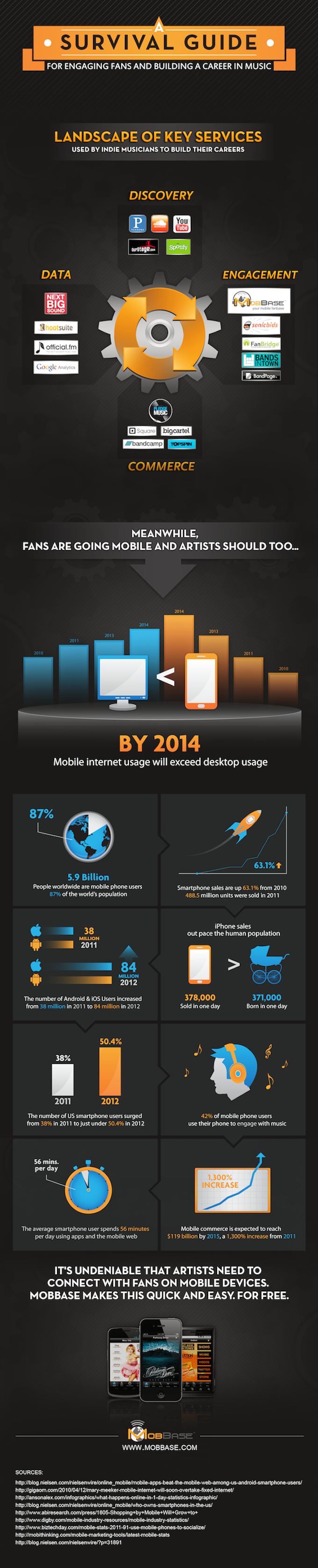
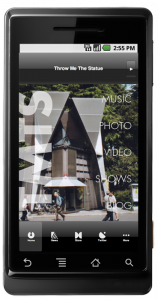
Think about MobBase. They are a web service that allows you to have an iPhone application. They act as a developer, hosting company and partner to push your music onto 40 million iPhones. Although they have branded themselves as a service to musicians, they are really a member of your team.

Other members may include graphic designers, marketers, booking agents, financial people and so on. These team members are there to support you and your efforts in growing your vision. There is not one single person that can handle and grow your entire business, but one you understand that to have a career with any type of longevity, you actually need a business.

Some Hard Ass Work

Your music/work/life balance is not an easy mental state to just sit on the couch and figure out. It’s something that requires a ton of time and effort. The artists that I see making the biggest investment in their careers are the ones that take responsibility for their entire career.

We profiled Rhymefest a few days ago over on GYRS. The guy has created a wealth of good music. This is where it starts. Now it’s all about awareness and monetization. He has crafted a pay-what-you want mixtape. He’s blogging. He’s on Twitter connecting with fans. He is using Facebook to connect with a different audience. He is playing live shows. He is reaching out to popular sites and providing quality conversations for their audience.

In short, he is taking responsibility for his success and his career. That is just one example of the entrepreneur mindset for the musician.

Over the next few weeks we will be exploring marketing and business ideas for your music career in this little guest writing feature. Big shout out to MixMatchMusic for letting me hang out over here and check out the video I shot with MixMatchMusic’s co-founder, Alan Khalfin, about iPhone apps, marketing and design. It came out really cool.

Till next time.

This post was written by Greg Rollett, a music marketing and digital entrepreneur from Orlando, FL. He is an advocate of the New Music Economy and has an awesome community of entrepreneurial minded musicians at Label 2.0. Follow him on Twitter, @g_ro to chat about the music game.

photo credit: Chris-Håvard Berge

Share and Enjoy:
  • Twitter
  • StumbleUpon
  • Digg
  • Facebook
  • del.icio.us
  • MySpace
  • Technorati
  • FriendFeed
  • LinkedIn

Build Your Fanbase Through The Niche Music System


As the music industry continues to evolve, artists are presented with more and more great options for marketing and distributing their music online and through mobile devices. This abundance of choice has left many artists, managers and labels confused as to how to navigate these digital waters, and use digital tools together with classic strategies (like playing shows and selling merch) to succeed.  Direct-to-fan campaigns are a big part of the new model, but before you can effectively engage in these strategies, you need to have a core group of fans that you can actually market to. It’s the classic get 1000 true fans and you will succeed concept, and while you don’t need 1000 fans right away, you do need at least a small group of loyal fans before direct-to-fan activities become viable.

Enter the Niche Music System. Created by Hagop Tchaparian, the Niche Music System is a strategy designed to help you succeed in the music business through the leveraging of music niches. The idea is to carve a small, local niche for your music in order build initial traction and then promote and rise up through that niche to grow and widen your reach. The logic behind this is that for every niche, there is already an existing audience that is pre-exposed to the sound of that niche. So while you may need to tweak your sound to fit into a specific niche, the Niche Music System provides you with a much easier way to build an initial following.

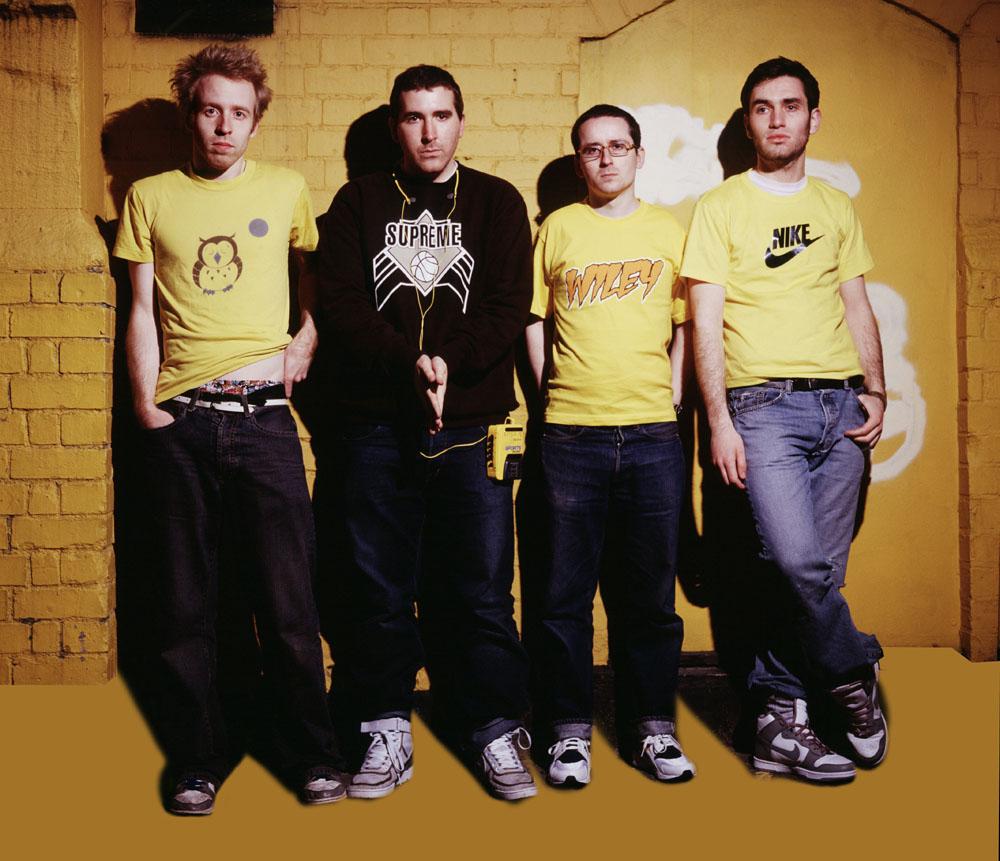
Hagop initially created the system to mirror the processes his own band (Symposium) went through to gain attention, build a core following, play for more people and make more money. Subsequently, he helped implement a similar system in his work with English electronic artist Hot Chip (pictured below) to help them build early traction, rise through their niche and ultimately get signed by DFA/EMI.

The Niche Music System has now been turned into a 12 week video/audio/PDF course designed to help you get people to care about your music and come out of obscurity.  For a great intro to the course, you should take the time to check out the video below. While the course is normally $47/month (for three months),  because you are an Evolving Music reader, you can get it for $27/month! To sign up and receive the discount, click here.

Share and Enjoy:
  • Twitter
  • StumbleUpon
  • Digg
  • Facebook
  • del.icio.us
  • MySpace
  • Technorati
  • FriendFeed
  • LinkedIn

Deep Artist/Fan Connections Critical to Success in Music 2.0

More than nine million musicians are trying to connect with more than 200 million music fans, according to some estimates. The huge numbers alone would suggest the odds are in their favor. Yet the channels musicians have traditionally relied upon to get their music discovered, promoted and sold are increasingly irrelevant and as a result, musicians are increasingly on their own, without labels, record stores or radio to help them.

“The artist’s challenge is to convert casual fans into loyal fans, and loyal fans into paying customers,” said Charles Feinn, CEO and co-founder of music technology innovator MixMatchMusic. “Getting your music discovered just isn’t enough. Musicians have to engage and involve casual listeners in order to build deep and lasting connections with them, and to convert them to loyal fans. These connections are what drive sales of the concert tickets, band merchandise and CDs artists need to pay the rent and put gas in the van.”

According to Feinn and many other music industry observers, record labels play a smaller and smaller role in breaking new bands or even promoting signed bands. Record stores are disappearing and radio is less and less of a factor in promoting new music. And it’s hard for a new band to breakthrough amongst the millions of songs in the iTunes Store. It’s also true that music fans have changed, acclimated to the read/write web and the social interaction that comes with it, and looking for the same experience with music and the artists who create it.

“While the business part of the traditional music business is breaking down, music is alive and well and there is more music than ever,” said Feinn. “We’re on a mission to help keep music alive, and we’re doing so by helping artists forge deeper and more meaningful connections with fans.”

Feinn said a growing number of artists are turning to new Internet-based initiatives, such as the remix promotions pioneered by Nine Inch Nails and Radiohead, to help them engage with and connect with music fans.

“Involving fans in the creative process by encouraging them to remix and mash up a new song from the musical building blocks provided by the artist, is catching on as one of the best ways to make the artist – fan connection stronger,” he said.

Feinn said that more than 60 artists have launched remix promotions based on MixMatchMusic’s Remix Wizard, a simple-to-use widget that any fan with a broadband connection can use. Artists including Pepper and Zion I have loaded the building blocks of songs – the guitar, bass, keys, drums and other elements called stems, into customized versions of MixMatchMusic’s widget, and invited fans to remix the stems to create new sounds and songs with them. He said the company’s site has received more than half a million impressions since the beginning of the year, and more than 80 thousand plays of fan-created remixes.

Feinn said the Remix Wizard is a fan-friendly approach to the more complex remix technologies employed by Nine Inch Nails and Radiohead. Bands such as Pepper feature remixes submitted by fans on their sites and MySpace pages, and some artists even promise to incorporate especially imaginative fan-created interpretations of their music in future albums.

Feinn said the Remix Wizard is the first in a series of artist and fan friendly technologies from MixMatchMusic designed to forge even stronger and deeper connections.

“Music has the power to bring people together,” said Feinn. “It’s exciting and also humbling to know we’re playing a small part in making those connections happen, through our technology-based products and services that help musicians convert casual music fans into loyal fans, and loyal fans into paying customers.”

mixmatchman_450

Share and Enjoy:
  • Twitter
  • StumbleUpon
  • Digg
  • Facebook
  • del.icio.us
  • MySpace
  • Technorati
  • FriendFeed
  • LinkedIn