Tag Archive for 'Last.fm'

Spooonful: Hand Delivered and Easy to Swallow Music Discovery

You love discovering new music. You love social networking and social media. Everything that ends with 2.0 gets your attention. Out of sheer enthusiasm for emerging technologies and your obsession with music, you sign up for every new service you find.

When it comes to music discovery, maybe you’ve tooled around with the likes of Last.fm, Grooveshark, Fuzz, iLike, Pandora, imeem, or one of the many others out there. If so, you may have experienced a sense of disorientation, information overload, or maybe you became paralyzed by indecision. Or maybe you’re simply too busy to spend time looking for new music and you’d rather that new music could just come looking for you for once.

A nice little service called Spooonful has a solution to that problem. In their own words: “Our mission is simple. A free weekly email newsletter delivered right to your inbox introducing you to one great new artist or band at a time. You’ll get a preview of what they sound like as well as links to buy a track, a whole album, even get out to a show.” Your weekly spoonful of new music! Check it out.

Share and Enjoy:
  • Twitter
  • StumbleUpon
  • Digg
  • Facebook
  • del.icio.us
  • MySpace
  • Technorati
  • FriendFeed
  • LinkedIn

Why Musicians Should Jump on the Twitter Bandwagon

Twitter is not just for tech geek bloggers anymore. (Yes, that was a Scobleizer shout out.) Oh no, my friends. Twitter is for everyone. Especially DIY musicians.

Before you read the rest of this post, open another tab and listen to “You’re no one if you’re not on Twitter” in the background. It’s in the little music player at the top of this page. Just a little soundtrack for ya.

And, while you’re distracted, go ahead and follow evolvingmusic on Twitter.

Now, not everyone agrees with the merits of twittering as a part of an overall marketing strategy for musicians. I, however, would not only include Twitter in my strategy, I would make it one of the main features.

I know, Twitter can be mildly reminiscent of a 90s chat room sometimes. (I never really understood the appeal there). But instead of creepy old men posing as teenage girls and lonely housewives looking for excitement, it’s an entirely different crowd. Twitter is full of intelligent, resourceful, witty people who are passionate about new technology, endlessly curious about a wide range of topics, and more than happy to share helpful information. Twitter has become a great resource for all kinds of things, and perhaps surprisingly, for as-it-happens news as well.

But it seems to me that not very many musicians are taking advantage of this brilliantly simple tool. Yet.

As most of us know by now, the music industry has dug itself into a deeper hole than it can get itself out of for the time being and musicians are pretty much on their own when it comes to creating their own success. Obviously, you need a MySpace Music page. (I hate MySpace. I really do. But it IS necessary for musicians.) Obviously, you need a website, where you post your photos, tour dates, bio, etc. The next steps are also important: your blog (let your fans get to know you), your Facebook page, a Last.fm account, a YouTube channel for your music videos. These are all part of a multi-pronged approach to creating your musical identity online. Let your fans find you in the places where they are already spending their time. Give them the content they are already looking for.

Ok, so if I do all this, do I still need Twitter? Who cares what I had for lunch? Isn’t it a waste of my time??

Absolutely not! And here’s why.

First, it’s another way to broadcast the key things that you already have on your MySpace, Facebook, website etc, like tour dates, album release dates, and what not.

Second, and more importantly, it’s a way – similar to blogging – to get more personal. To let your fans get to know you, the person, in addition to you, the musician. Whereas blogging allows you to rant and rave and express your opinions in a very personal way, Twittering (which is technically microblogging), allows for the same thing. Just, you know….in 140 characters or less.

Those who follow you (presumably your fans) are interested in what you have to say, what you are doing, what you are feeling and thinking. They care. Whether you tweet about what city you’re in for your tour tomorrow or how much you hate the president today or what color underwear you have on, they care. (And if they decide they don’t care, they’ll just unfollow you.)

Say important things, say meaningless things, say witty things, ask questions. It’s all relevant if it’s on your mind.

Next, as a way of rewarding your loyal followers, give them stuff. Much like Obama sent his VIP pick out by text message first, you could announce a small show or party only on Twitter, or include a link to a free download in a tweet so your followers get it first.

Lastly, it’s a way to interact with your fans. Ask them for suggestions, like song requests for a set list at an upcoming show. Ask them which songs they like best on your last CD. Let them show their adulation with their @ replies.

One mistake to avoid: Don’t let someone else produce your Twitter content for you. Letting a PR manager or college intern or your unemployed roommate write your updates for you will defeat the purpose. Only you can mold your online identity and make it actually you.

Another tip: Share music with your fans on Twitter! You can do this by using Tra.kz, which will shorten your long audio links into cute, little links that point fans to a player page for the song; the song’s Tra.kz page  displays all the tweets about the song and makes it easy for people to share.

Which artists are currently on Twitter? Only a few have caught on so far. Here is a sampling: Snoop Dogg, MC Hammer, Jimmy Eat World, Sara Bareilles, Bjork, Brett Gurewitz (of Bad Religion), A Fine Frenzy, and Patrick Wilson (of Weezer).
Share and Enjoy:
  • Twitter
  • StumbleUpon
  • Digg
  • Facebook
  • del.icio.us
  • MySpace
  • Technorati
  • FriendFeed
  • LinkedIn

Wait, You're Telling Me the Long Tail Is Flat?

Have you heard the news? Apparently the long tail is flat. For those of you unfamiliar with the long tail, it’s a theory coined by Chris Anderson (The Long Tail: Why the Future of Business is Selling Less of More) that describes the niche strategy of businesses that sell a large number of unique items in relatively small quantities. Because of the low overhead incurred through the selling of digital products, the long tail was supposed to help retailers of less popular items earn significant profit by selling small volumes of hard-to-find items to many customers (instead of only selling large volumes of a reduced number of popular items).

For musicians, the long tail of music was supposed to help redistribute the wealth a bit in the music industry. It was supposed to shift the industry away from having a few big artists that earn large profits to having many smaller indie/niche artists that earn moderate profits. The notion behind this was that through digitization, niche releases are more accessible to fans and thus easier to discover, purchase, and consume. Through this long tail of music, a musician’s middle class was supposed to have been formed. Well, where is this musician’s middle class that Gerd Leonhard and Dave Kusek wrote about a few years ago? Why has the long tail not proved to be commercially viable? Why aren’t niche artists profiting from their art online?

I suspect that the long tail theory is still viable for indie and unsigned artists to make money from their works. It’s undeniable that given the low overhead of making and distributing digital music, an artist could sell less and make more. Plus, there are more licensing/placement opportunities today than ever before and there are plenty of sites that help musicians leverage this. But still, why then is the long tail flat?

In my mind, there are three main reasons:

First, Creative Commons licensing has failed to help musicians monetize their works. Any notion of CC providing a viable profit mechanism for musicians is a pipe dream. The purpose of CC licensing is to expand the range of works available for others to legally share and collaborate on. It’s clear that this is the direction that Copyright Law should go in. It’s also undeniable that CC has a noble purpose that contributes to more creative works for the general public to enjoy. But, CC hasn’t actually been leveraged to make artists licensing works under it any money.

While the reason I make music is not to make money, I certainly wouldn’t mind seeing a little profit from my works. Perhaps, CC has overlooked this. With the vast number of works distributed under CC, how can their collective power be leveraged to compete against the market power of bigger acts. Isn’t this what the long tail is all about? If CC doesn’t figure this out, how can it reasonably expect to be an appropriate solution for distributing creative works? Right now, CC licenses seem like a better fit for reference works that people can use to share knowledge. But for unique works of art, the notions of sharing and monetization must be intertwined. Wouldn’t you rather your favorite artists not get a day job so that they can always be making new music for you?

Second, long tail artists haven’t been working collectively to distribute their music. It’s hard to argue against the power in numbers; simply put, the more people that work together on a common purpose, the higher the chance that purpose is achieved. This is the underlying theory that the American Revolution was built on (“Join or Die” anyone?), that collective bargaining is based on, and that a shit ton of sites on the web base their successful business models on (Craigslist is a classifieds aggregator; eBay is an auction aggregator). So, why aren’t long tail musicians taking advantage of this?

There have been some attempts to do this, and some are even successful. Magnatune, for example, aggregates CC works and sells them in an Itunes style store. But the biggest vault of CC works, ccMixter (CC’s own music sharing/collaboration community), has no monetization whatsoever, not even ads (which its artists could perhaps see a rev share on). Why hasn’t ccMixter leveraged the collective power of its community to make its members some money? Because of this, CC licensing seems to be more effective as a marketing tactic than a new rights management system — license one song under CC, have fans share and remix it, and have this exposure trickle over to other songs which are sold.

Merlin is a good example of an organization that is thinking about the collective power of long tail musicians. Merlin is the world’s first global new-media rights licensing agency that manages new-media rights for indie artists. The collective market share of Merlin artists is larger than EMI’s market share. That’s right, its market share is on par with the majors. Through this mechanism, indie acts can punch above their weight to eat like a bird and shit like an elephant. And while Merlin dropped the ball a bit on the Last.fm negotiations, it wil be successful if it can find novel ways to leverage the power of its artists.

Third, long tail musicians haven’t been presented with the right ways of creatively distributing their music so that they can actually make a profit. Despite the digital boom, it’s still hard for unsigned and indie musicians to make much money form selling finished songs. While it’s easy to give fans the option of buying a song, the reality is that more music is now being distributed than ever before and musicians have to compete against other long tail musicians and the many options consumers have to get the music for free.

What seems to be happening is that long tail artists are stuck on the notion of just selling finished works. If Merlin fails, it will certainly be because of this. Instead, long tail artists need to look to aggregating as many sources of revenue as possible, and to create as many value adds for their music as they can. A finished song should only be a part of the value proposition an artist gives a fan. If these value adds are engaging and give fans a new experience, they will convert casual fans into loyal fans and will give them a reason to financially support artists. While there are tools on the web such as Topspin, ReverbNation, and AWAL that currently target indie and unsigned artists, these services need to recognize that focusing on selling finished works may not be entire answer.

So how are we to aggregate and distribute the long tail of music so that its collective power starts making an economic fuss? How do we improve music discovery so more of these artists get discovered? And if we’re not able to sell songs, what other kinds of value adds can we give fans to boost our brands and how do we monetize those value adds? The answers to these questions are at the heart of a the type of service that unsigned/indie musicians need to profit from their works in this new era of music. Soon, we will all find out.

Share and Enjoy:
  • Twitter
  • StumbleUpon
  • Digg
  • Facebook
  • del.icio.us
  • MySpace
  • Technorati
  • FriendFeed
  • LinkedIn

Is Last.fm the Profit Mechanism DIY Musicians are Looking for?

The $18 billion music industry includes a relative handful of famous acts and tens of millions of independent and semi-professional artists who have very limited opportunities to profit from their art. Because of the Digital Audio Workstation (music software) revolution, more people are recording music than ever before. And through the use of music discovery sites, more people are distributing music than ever before. But, what we haven’t seen from the music discovery model is a way for DIY and unsigned artists to profit from their art online. Last.fm hopes to change that, apparently.

Starting July 1, Last.FM (or rather, CBS, I should say) will have an Artist Royalty Program, where artists get paid whenever their music is streamed from the site. The most important thing is that this program is intended for and marketed to unsigned/DIY artists, as Last.fm already pays royalties to signed acts via SoundExchange. According to Last.Fm: “This is a big day for DIY artists. We’re leveling the playing field by offering them the same opportunities as established bands to make money from their music. The young musician making music in a bedroom studio has the same chance as the latest major label signing to use Last.fm to build an audience and get rewarded.”

Here’s how royalties will be paid:

  • If your track is played on their free radio service you will accrue a 10% of the share of Last.fm’s net revenue from the free radio service.
  • If your track is played on their personalized premium radio service, you will accrue the greater of either 10% of the Share of Last.fm’s Net Revenue from the personalized radio service, or US $0.0005 for each complete transmission on the personalized radio service.
  • If your track is played on their free on-demand service, you will accrue 30% of the Share of Last.fm’s Net Revenue from the on-demand radio service.
  • If your track is played on their premium on-demand service, you will accrue the greater of either 30% of the Share of Last.fm’s Net Revenue from the premium on-demand service, or US $0.005 for each complete transmission on the prepaid or subscription on-demand service.

While the royalties to be paid aren’t much, they’re a good start, demonstrating the larger issue of finding ways for DIYers to profit form their works. Since most people have their music on several (if not all) music discovery sites, hopefully other sites will follow suit (myspace, are you listening?). Imeem implemented a rev share program last year, but it has failed to produce any real revenue for unsigned musicians. With these moves, however, Last.fm has elevated itself past the clutter of music discovery sites, to become a premiere destination for on-demand music discovery. While I personally prefer music recommendation sites like Pandora, after I discover an artist on Pandora, I want to hear more tracks, see more content, and learn more about the artist. That’s where sites like myspace, last.fm, and ilike come in. And while music recommendation sites would be crippled by paying royalties, sites like myspace and last.fm should do so.

Unfortunately, neither Last.Fm nor Imeem is the answer. Rather, they are both part of a solution that will require DIY musicians to aggregate many sources of revenue in order to make some money. But, there are not many of these sources currently available. A lot of DIY musicians have been distributing under Creative Commons (“CC”) for the last 7 years, but nobody has figured out exactly how to monetize CC works. You would think that the collective strength of CC music could be leveraged to make some money for the artists, but this hasn’t happened. The only caveat to this is Magnatune. For this reason, CC has proven to be a valuable alternative to copyright law for reference and informational works, but not for works of art.

So what other profit mechanisms are there for unsigned musicians? There are a ton of iTunes style sites where people can purchase MP3s, but lets face it, most people aren’t buying tracks from us DIY guys. Certainly sites like PumpAudio, YouLicense, and AudioMicro have helped, but the go-to-profit mechanism has yet to be unveiled. Stay tuned!

Share and Enjoy:
  • Twitter
  • StumbleUpon
  • Digg
  • Facebook
  • del.icio.us
  • MySpace
  • Technorati
  • FriendFeed
  • LinkedIn

Top 5 Music Discovery Sites

Update: Read our breakdown of Music Discovery in 2010 here.

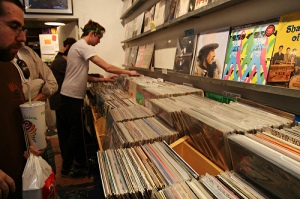
Long gone are the days of browsing through record stores to find new music (record stores are still awesome hangouts though), making physical mixtapes for your friends (except for the nostalgic among us), and putting CDs on your Christmas list (iTunes gift cards anyone?). Digital technologies and the seemingly endless supply of online music destinations have forever changed the way we discover the tunes we like.

Record Store

Born out of my own frustration with the retardedly over-crowded “music discovery” space, this post aims to sift through the plethora of sites, many of which are variations of the same concept, and pinpoint the best ones.

Do you prefer to listen to short clips of top downloads on iTunes because it’s easy? (Ya, iTunes is more of a place to buy a song/album that you know you want, but you can definitely discover new stuff by poking around, checking the free download of the week etc). Are you a fan of one of the numerous music social networking sites that let you discover people with similar musical taste, create/share playlists, or track down obscure indie bands? Or do you love Pandora’s almost-no-work-involved recommendation system?

We’re all different when it comes to our preferred methods of music discovery, but the end goal is the same, right? We want to consistently discover new music that resonates with us personally – bands we can go see live, music to download, artists we can relate to. There are so many places to do this now it makes my head spin, so I needed to simplify.

With that, here are my top 5:

Pandora
I’ve been a fan of Pandora for a long time. The internet radio station, with its robust recommendation system based on the work of 50 analysts who break songs down into musical attributes, is surprisingly good at finding music that suits your tastes. And with the thumbs-up/thumbs-down rating system, the more you use it the smarter it gets. Their Facebook app is certainly convenient too.

iLike
If you can put up with 30 second clips, iLike is great for discovery. The fact that it can be plugged into Facebook, iTunes, MySpace, Bebo and others makes it a versatile social platform and is probably why they have so many registered users making profiles, sharing playlists and the like. And you can get lots of free music from new artists.

Fuzz
“Music Uprising…Connecting people who create and love music”. Other than having pretty good music discovery tools, I like Fuzz because I like the Fuzz Manifesto. This is the kind of mentality that I think everyone in the music industry needs to adopt, and soon, in order to survive and thrive in the exciting new frontier that is developing. Open, participatory, fair etc…

Grooveshark
In addition to letting you listen to any song in its entirety, Grooveshark rewards you for sharing music with people by giving you credits for free music. It also serves as an online library so you can store your music and access it from anywhere. There is a tagging/ranking system to help you find what you want as well as playlist creation/sharing.

Last.fm
Easily one of the most dominant players in the social music discovery space, Last.fm has a powerful recommendation engine based on data from the user community (unlike Pandora’s engine which matches similar musical attributes). Worth noting here is that Last.fm is now paying royalties to unsigned artists – and thus providing an alternative for artists who are not part of SoundExchange.

If this list is too short for you, check Mashable’s Music News Toolbox: 50+ Links for Discovering New Music to read about sites like iJigg, MOG, Goombah, Music Nation, and many more. Or leave us a comment with your favorite ones.

And of course, soon you will be able to discover kick-ass new music at MixMatchMusic. Stay tuned.

Share and Enjoy:
  • Twitter
  • StumbleUpon
  • Digg
  • Facebook
  • del.icio.us
  • MySpace
  • Technorati
  • FriendFeed
  • LinkedIn

Brad Sucks Does Not Suck

Self-proclaimed “one man band with no fans”, Brad Sucks (Brad Turcotte) is one of the pioneers of “open source music” and the Free Culture Movement. By waiving all the rights to his songs and giving fans access to the source of his songs for remixes, Brad has not only built a huge following, but his songs have been licensed for commercials and many of his fans choose to pay for his music.

This serves to further reinforce the school of thought which maintains that giving fans access to free music (whether for listening or download) actually results in increased sales in the end (of CDs, digital music, concert tickets, merchandise etc.)

Here is one of my favorite Brad Sucks songs (in a fan-made music video done as a film project and editing test):

Carefully, Correctfully Wrong has an interesting way of describing Brad’s sound: “…a smooth mix of indie rock and electro, mixed with sardonic lyrics and pounding disco beats. It’s what the Scissor Sisters would sound like if they weren’t trying to be the Bee Gees.”

Brad Sucks is a great example of a DIY musician who has taken full advantage of the tools available to artists online. Other than his official site, you can find him on MySpace, CD Baby, ccMixter, Last.fm, Magnatune, iLike, Sellaband, Jamendo, MOG and Twitter to name a few. Not only does Brad Sucks encourage remixing of his songs, he invites fans to submit their remixes so he can post them on the site.

I love the simplicity of his site and the plethora of options he offers his fans for how to enjoy his music. On the home page you can view the progress of his next album, view his upcoming gigs (you can also “demand” to see him live…), buy the album there (or Amazon, iTunes, CD Baby etc). On the music page, you can listen to songs, download them for free, buy them on a number of sites, or make a donation etc.

Also. Is it just me or is this guy a freaking marketing genius? With a self-deprecating artist name like “Brad Sucks” and an equally likable album name, “I Don’t Know What I’m Doing”, and the simple almost child-like branding style, he gets your attention immediately and is not easily forgotten.

Brad Sucks genuinely understands the power of encouraging direct artist-fan interaction by giving his listeners what they want, when they want it, and how they want it. And by letting them have a voice.

And he definitely does not suck.

Share and Enjoy:
  • Twitter
  • StumbleUpon
  • Digg
  • Facebook
  • del.icio.us
  • MySpace
  • Technorati
  • FriendFeed
  • LinkedIn

Ultraviolet Sound – Another Great Music 2.0 Band

Recently, I had the pleasure of discovering a band that totally rocked my world from the second they walked on stage. Following the Presidio 10 race, an event put on by The Guardsmen and the Ashlyn Dyer Foundation (two San Francisco-based charity organizations), there was a party for the runners, organizers, supporters etc. Click here for more great pics of the event taken by Guru Khalsa of TheAList. Though I was only able to catch a few of their songs, Ultraviolet Sound secured itself a place on my list of Hot immediately.

Not only do they have that funky, gritty, electro pop punk sound that I love, but they (like more and more bands every day) are challenging convention and embracing the changing music industry. Ultraviolet has teamed up with TrueAnthem, which is an “advertiser supported online music promotion and distribution company” all about connecting the band to the fan. You can listen to and download their songs on TrueAnthem for free, because at the start of each song is a brief “sponsored by” message delivered by the band itself. Howard Stern, anyone? Not sure if he was the first one to read the radio’s commercials himself, but he certainly popularized the concept.

While this model won’t work for everyone, I know I for one will gladly listen to a quick message if I get the song for free. Honestly, I’m surprised more media outlets haven’t embraced the Howard Stern style method of having the person/people/band people are tuning in for deliver the ads. San Francisco’s dance station, Energy 92.7, does this well. With any other radio station (yes, I still listen to traditional radio in the car) I change the station when commercials come on. But when Fernando and Greg are doing their show, I gladly listen to all their ads cause their delivery is priceless – they make going to the dentist or mattress shopping sound fun. Since I have come to trust their recommendations I am more likely to check out the things they advertise than what I hear elsewhere.

We see more and more examples of free music, almost-free music, listen-for-free music and pay-the-band-not-the-label music sources everyday. Those who are still clinging onto traditional models – and can’t pull their heads out of their asses – sit around and bemoan the crumbling of the music industry, stressing over declining CD sales and cursing today’s youth and their sense of entitlement and wanting everything for free. Meanwhile, others are watching with interest as the industry evolves, are adapting to it and celebrating the myriad new opportunities being created.

Last.fm is a great example. They recently demonstrated that giving users access to free streaming music encourages music purchasing. Since their “free, on demand” service launched, they have experienced a 119% increase in their sales through Amazon. Those are some nice stats, people. Even MySpace Music is looking to the stream-for-free model to increase record sales.

Let’s support bands like Ultraviolet Sound, explore the many new ways of discovering, making, and distributing music, and evolve the shit out of this industry, shall we?

Share and Enjoy:
  • Twitter
  • StumbleUpon
  • Digg
  • Facebook
  • del.icio.us
  • MySpace
  • Technorati
  • FriendFeed
  • LinkedIn

The SanFran MusicTech Summit: Rockstars, Lawyers, Nerds and Me

Last week, a few of us attended the SanFran MusicTech Summit to worship learn from some of the innovative leaders in our rapidly evolving and still young(ish) industry. After nearly breaking off my big toe during a confused jog through Japantown, I limped into Hotel Kabuki armed and ready for note-taking, question-asking, and hand-shaking.

The group I found there was a rather predictable (yet lovable) mix of demographics including your standard socially awkward tech geeks (my favorite), the token I-was-born-for-networking (and my-Rolodex-is-bigger-than-yours) schmoozers, some badass rocker chicks turned marketing gurus, the young and fearless CEO/CTO/COO/founders of countless startups, the smartypants intellectual property attorneys (bless their souls – I’d rather be forced to listen to Mariah Carey* on repeat for a year while locked in a windowless room than be in their shoes), career musicians and producers, and a smattering of randoms. Each hour we had the choice of attending one of two panels or general schmoozing in the lobby.
* To be fair, I think she has an amazing voice, I just hate her music. A lot.

Halfway through one of the panels I noticed someone on their laptop twittering. Of course! I thought. Twitter! This is the perfect time to twitter. (Until then, I had only used the service a few times to say mundane things like “sore from working out” or “yay iPhones” or some such nonsense, and when you only have two people following you that seems pretty pointless). Suddenly it was starting to sink in how Twitter can be a very powerful tool. I quickly logged on and found the SFMusicTech live feed which, to my pleasant surprise, was filled with commentary ranging from concise updates about the panels (helpful for those not at the summit or just in the other room) to snarky comments about the speakers. It felt like a cross between real-time news coverage and anonymous chatroom blather.

When I twittered later in the day noting that most of the food on the snack table was yellow, someone promptly reiterated my observation and wondered if there was a hidden symbolism we were missing. Later one of the panelists messaged me directly and thanked me for quoting her earlier. That’s when I suddenly felt like part of some sort of cozy little invisible family. Want to join my twitter family? Follow me here.

Here are some highlights from the day:

  • During the “Future of Radio” panel – major trends include personalization and recommendation (think Pandora and Last.fm) and mobility (internet radio integrated into your car stereo, tabletop devices, on your phone, in your stereo etc).
  • During the “Creator’s Perspective on Technology” panel – Creeper Lagoon’s Sharky Laguana talked about a cool service he created called MixPal. MixPal allows you to upload your music, choose the price, place a “MixLink” anywhere online (website, blog, MySpace, whatever) and you keep almost all the proceeds (they get 10% commission). Look at how their pricing compares to iTunes and Snocap. Since they’re non-exclusive you can use them in addition to any other service you use. MixPal is simple, straightforward and all about letting the musician decide.
  • Also during “Creator’s Perspective…” – panel moderator and summit co-producer Shoshana Zisk commented that now in the music tech industry “People don’t have to learn the language to speak music”, which resonated with me because that is very much one of the things that MixMatchMusic is facilitating – allowing non-musicians and music fans to participate in the creative process too.
  • During the “Social Networking and Music” panel – Ali Partovi, CEO of iLike, noted that they DO compete with MySpace Music. He recommended that artists keep a MySpace presence, but also use iLike because they will find far more fans on the latter.* Also interesting – apparently, people who use iLike purchase 250% more music online than people who don’t! I bet the ringtone companies love them… Toward the end of the panel, Ali asked with a note of exasperation in his voice why there isn’t just a “buy this” button anywhere and everywhere that you find music?? Excellent point. Anyone know if this is a realistic expectation in the future?

*Are you a musician who has a profile on both iLike and MySpace (and/or other sites)? I’d be curious to hear where you feel you’ve established a larger fan base. Leave a comment or email me.

  • During the “Business Models That Work…and Those That Don’t” panel – moderator Andrew Stess, CEO of Music IP, mused that someone should build a choose-your-own-price service for concert tickets a la Radiohead. I so agree. In the meantime, Inticketing, one of the summit sponsors, has a great online ticketing system and event management solution (not to mention a green business) with clients like Burning Man, the Great American Music Hall (where our buddy Scott recently performed), Yoshi’s, and Victor Wooten.

After the panels ended, we were unleashed into the boozing and networking portion of the event, which also included a performance by singer-songwriter Samantha Murphy. Though I had to run off to my own weekly musical endeavor, in the hour or so I was there I met some interesting people. One musician/student I was chatting with about MMM emailed me later to say he was delighted to see that I had blogged about the Bubblegum Sequencer. Turns out he is one of the Berkeley students that made it! Small world.

Overall, I found the Summit to be helpful and inspiring. What struck me was how nobody really knows where the music industry (especially the online music industry) is going. Licensing, copyright, distribution…these areas are rapidly being dismantled and slowly rebuilt without any concrete blueprint. Or vague guideline for that matter. All I know is that I’m excited to be riding the wave that is technology and I can’t wait to see what kind of distant exotic shore it dumps us on.

Social media, which wikipedia says uses “the ‘wisdom of crowds’ to connect information in a collaborative manner” is redefining the way that we interact with technology, one another, and our environment. I think this is especially true for those of us who are building something online (a fan base, a website, a blog, a clientèle, an identity) or those of us who simply enjoy being a prosumer/producer/content creator/participant (via blogging, twittering, digging, social networking, posting YouTube videos etc) rather than just a consumer. Passivity is so…well, passè. But it’s not just a matter of getting involved. Once you’re involved, you have to participate. And regularly. Let’s face it – no one is going to read a blog that you update once a year.

Ariel Hyatt of Ariel Publicity put it best when she said: “New media is like an endless garden – you can’t just plant it and walk away”.

Share and Enjoy:
  • Twitter
  • StumbleUpon
  • Digg
  • Facebook
  • del.icio.us
  • MySpace
  • Technorati
  • FriendFeed
  • LinkedIn

Find Live Music. Easier.

Most of us like a good live show once in a while. Though I’ve never been fanatical about concert-going or following any one band around the country, I do get surprised every time I go just how intense the experience can be. Whether it be a jazz trio in a smoky lounge, a jam band in a beer can littered park, or a punk show with a leg-breaking mosh pit, each experience has its charms.

Music festivals can be awesome because of the sheer number of bands you can catch in one place! Coachella, for example, which I got into for free twice – once as a rep for Han Vodka and once as part of the Jack Johnson team while I was working for Oniracom – was amazing in that regard. Frustrating though, because you can’t be in like 12 places at once. I guess hanging out while Jack Johnson and G. Love warmed up in their trailer was worth missing a few bands for though…(Yay for backstage passes!)

But ya. Seeing the band(s) you love live and sitting amongst other blubbering wide-eyed fans definitely has its merits. When I saw Pink Martini live a few years ago, I think I cried through basically the whole show. Gotan Project and Thievery Corporation had me dancing at the front like a total psycho*.

These days, though, I rarely take the time to keep track of who’s playing, where, and when. Luckily, there are a host of websites which can do that for you. JamBase is one. They’ve been around since 1998, but I was reminded of them recently, when another MixMatcher and I attended the SF New Tech meetup in San Francisco. JamBase was one of the featured presentations and after seeing them in action, I realized that they can make concert-going for us lazy busy people more feasible. Their comprehensive tour date search engine of over 40,000 bands should be a good start anyway. Other goodies include in-depth reviews, networking with other fans, listings of shows in your area etc. Check em out.

Obviously, they are not the only player in their field. One contender, which I found on TechCrunch, is the new startup Songkick. It helps you find the cheapest concert tickets – definitely a winning idea in my book. You can also track shows and blog posts about your selected entertainers, and there is a recommendation engine, which is “not generated from the user base, like Last.fm, or through careful analysis like Pandora.” Another alternative is LiveNation, which claims to be the “world’s largest live music company”.

Given the seemingly endless number of startups popping up every day, it’s hard to keep track of what’s what. My opinion about startups is generally based on their answer to the question “how will you make my life easier?” as well as secondary concerns like “how pretty is your website?” and “can you keep my attention for more than 30 seconds?” In this regard, JamBase has my vote. For now, anyway.

*My psycho dancing is nothing compared to the thousands of teeny bopper girls I watched morph into screaming hyenas at that one Backstreet Boys concert I got dragged along to years ago…I kept thinking poor chaperoning parents. Yet, oddly enough, many of them seemed just as excited to be there as their 3-13 yr olds. Admittedly, I may have kind of gotten into it too. Just a little.

Share and Enjoy:
  • Twitter
  • StumbleUpon
  • Digg
  • Facebook
  • del.icio.us
  • MySpace
  • Technorati
  • FriendFeed
  • LinkedIn